-
Our latest research on the Three Wests, the impacts of federal royalty rate reforms on coal and natural gas, home construction in Montana, and our newest staffer: Janet Clark. Read more
-
Our latest research on the benefits of LWCF, home construction in the High Divide region, commercial activities on National Forests, and our newest staffer: Kimiko Barrett. Read more
-
Our latest research on the updated EPS, economic impacts of National Park Service units, better planning to reduce wildfire risk, the latest county payments and projections, and the new website. Read more
-
Our latest research on federal coal royalty reform, reducing wildfire threats, trail user surveys, and Bonner County, Idaho’s resilient economy. Read more
-
Our latest research on trails, the economic value of public lands in Grand County, Utah, economic development opportunities in Wheeler County, Oregon, and climate impacts in the Great Lakes region. Read more
-
Our latest research on county payments, federal coal royalties, Montana’s economy and its public lands, and the economic opportunities in the Blackfoot River watershed. Read more
-
Our latest research on migration and population trends in the West, the Tongass Transition Framework, the need for a Natural Resources Trust, and the impact of the federal budget on county payments. Read more
-
Our latest research on reducing wildfire risk to communities, monitoring the impact of fracking on communities, lessons for wildfire from the federal flood programs, and how renewable energy tax benefits vary widely among rural counties. Read more
-
Our latest research on National Monuments, commercial activities on National Forests, the economic impact of National Parks, and using an index to target county payments. Read more
-
Our latest research on Firewise and suppression costs, case studies of how western communities respond to wildfire risk, the economic impact of National Park Service units, and measuring the restoration economy. Read more
-
Our latest research on the importance of non-labor income in the West, unconventional oil revenues, and free socioeconomic reports with details on every U.S. county. Read more
-
Our latest research on our Economic Profile System and recent updates. Read more
-
Our latest research on the economic impact of long-term energy development, an interactive atlas of the West’s economy, winners and losers from proposed county payments reforms, North Dakota’s oil revenue sharing program, and the economic potential of the Owyhee Canyonlands in Malheur County, Oregon. Read more
-
Our latest research on climate impacts in the Great Lakes region, using tools to determine vulnerability to climate change, understanding income from National Forests, and why state tax policy matters. Read more
-
Our latest research on the rising cost of wildfires, an interactive atlas on the climate and economy of the Great Northern Landscape region, testimony before the U.S. Senate on county payments, and updated timber cut and sold reports. Read more
-
Our latest research on the Wildland-Urban Interface (WUI), an interactive map on how protected public lands impact per capita income, policy on energy transmission, and the economic potential for a new Maine National Park. Read more
-
Our latest research on wildfire trends, improved socioeconomic profiles, fiscal and energy policy, and Montana’s Rocky Mountain Front. Read more
-

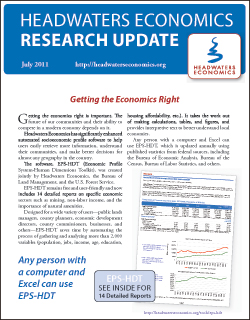
EPS: Getting the Economics Right
Ray Rasker, Ph.D.ALUMNIHeadwaters Economics has updated the Economic Profile System (EPS) to help decision makers access and analyze large amounts of information about their communities. Read more
-
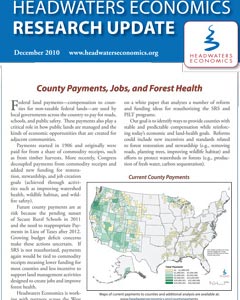
County Payments, Jobs, and Forest Health
Mark HaggertyALUMNIThis post summarizes a newsletter discussing the future of county payments, a White Paper to better to understand how possible reforms, and other research items. Read more
-
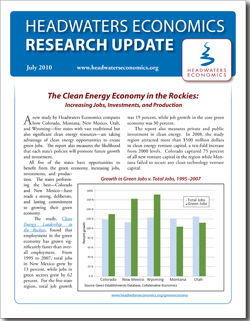
The Clean Energy Economy in the Rockies: Increasing Jobs, Investments, and Production
Julia HaggertyALUMNIThis newsletter summary highlights a study that compares how Colorado, Montana, New Mexico, Utah, and Wyoming—five states with vast traditional but also significant clean energy resources—are taking advantage of clean energy opportunities to create green jobs. Read more
