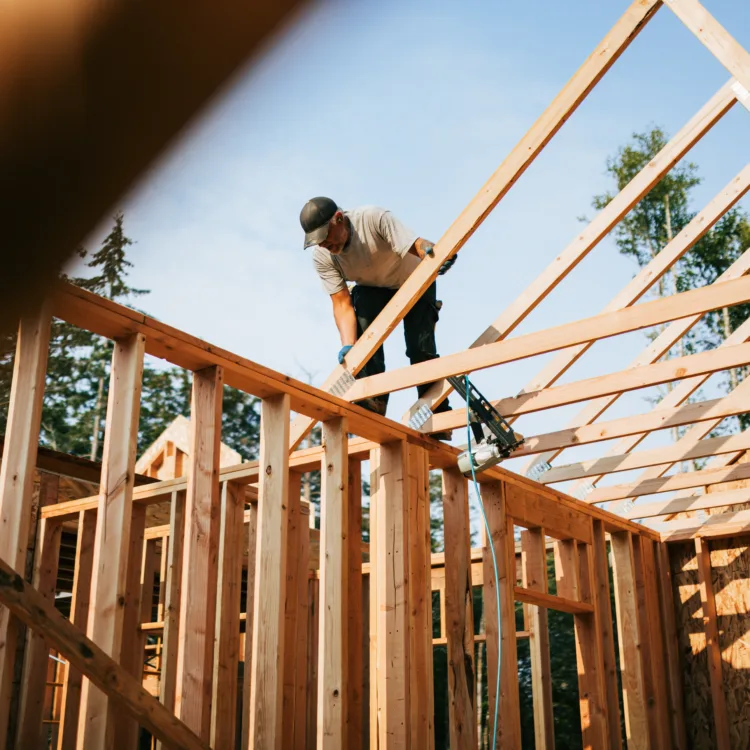
A growing wildfire threat and rising home insurance costs are driving many homeowners to make their homes more wildfire resistant. Upfront costs range from modest to significant, but many upgrades also provide lasting benefits beyond lower wildfire losses that can offset the initial investment over time.
Lower bills, less upkeep, a longer-lasting home
Headwaters Economics and Insurance for Good conducted an evidence review and synthesis to identify the household benefits of wildfire-resistant retrofits beyond reduced fire risk. The research shows many upgrades such as metal roofs, double-paned windows, and steel and fiberglass doors also deliver energy savings, lower maintenance costs, and a more durable home.
Detailed findings for each upgrade are available as a downloadable spreadsheet and a summary of the benefits is available as a PDF and in the table below.
In partnership with

Insurance for Good is a nonprofit organization supporting communities and policymakers with evidence-based solutions that align with their broader social, economic, and environmental goals. It curates trusted resources, provides tailored education and capacity building, supports innovation and solutions development, and undertakes research and analysis to improve policy and regulation.
Three Ways Wildfire-Resistant Upgrades Pay Off
Wildfire-resistant home upgrades can do more than reduce wildfire risk. Many also help lower energy costs, reduce maintenance, and last significantly longer than traditional materials—saving money over the life of a home.

Less maintenance
Many wildfire-resistant materials require less cleaning, painting, and repair.

Longer lifespan
Durable materials can last decades longer, reducing replacement costs.

Lower energy costs
Some upgrades improve insulation or reflect heat, reducing heating and cooling costs.
Roofs
Asphalt shingles need little upkeep, whereas wood roofs need moss removal, coatings, and reshingling.
Metal roofs can last decades longer than the 30–40 years typical of wood shakes.
Reflective metal roofs can cut cooling energy by 20%+ in hot climates, depending on insulation and color.
Doors
Fiberglass doors need only an occasional topcoat, while wood requires regular sanding and refinishing.
Wildfire-resistant steel and fiberglass doors last about as long as well-maintained wood doors.
A steel or fiberglass door insulates up to five times better than a wood door.
Windows
Metal-clad windows require less maintenance than wood windows.
Wildfire-resistant windows have a lifespan comparable to vinyl or well-maintained wood windows.
Wildfire-resistant, energy-efficient windows can cut heating energy costs by 15–30% in cold climates.
Decks
Composite decks need almost no upkeep, whereas a wood deck costs $375–$625 a year to maintain.
Concrete patios last 30+ years and composite decking 25–30 years, versus just 10–20 years for wood.

Need assistance with wildfire?
Community Planning Assistance for Wildfire (CPAW) works with communities to reduce wildfire risk through improved land use planning. The program is a program of Headwaters Economics, in partnership with the USDA Forest Service.

Gutters
Metal gutters only need cleaning, whereas wood gutters need regular painting, sealing, and oiling.
Copper gutters can last 50+ years, aluminum/steel 20+ years, and vinyl gutters 20 years or less.
Vents
Metal vents are less prone to degradation and require fewer repairs than plastic vents.
Metal vents are expected to last 2–6 times longer than plastic vents.
Siding
Fiber cement or stucco needs occasional cleaning, whereas wood siding needs maintenance every 3–5 years.
Fiber cement and brick/stone siding lasts 50–100+ years, versus just 15–30+ years for wood or vinyl.
Landscaping
Rock or gravel beds need almost no upkeep, while mulch should be replaced every year or two.
Over 10 years, rock beds cost about one-quarter to one-sixth what it takes to keep replacing mulch.
Actual savings and performance vary by climate, installation quality, product selection, and maintenance.
Less maintenance
Many wildfire-resistant materials require less cleaning, painting, and repair.
Roofs
Asphalt shingles need little upkeep, whereas wood roofs need moss removal, coatings, and reshingling.
Doors
Fiberglass doors need only an occasional topcoat, while wood requires regular sanding and refinishing.
Windows
Metal-clad windows require less maintenance than wood windows.
Decks
Composite decks need almost no upkeep, whereas a wood deck costs $375–$625 a year to maintain.
Gutters
Metal gutters only need cleaning, whereas wood gutters need regular painting, sealing, and oiling.
Vents
Metal vents are less prone to degradation and require fewer repairs than plastic vents.
Siding
Fiber cement or stucco needs occasional cleaning, whereas wood siding needs maintenance every 3–5 years.
Landscaping
Rock or gravel beds need almost no upkeep, while mulch should be replaced every year or two.
Longer lifespan
Durable materials can last decades longer, reducing replacement costs.
Roofs
Metal roofs can last decades longer than the 30–40 years typical of wood shakes.
Doors
Wildfire-resistant steel and fiberglass doors last about as long as well-maintained wood doors.
Windows
Wildfire-resistant windows have a lifespan comparable to vinyl or well-maintained wood windows.
Decks
Concrete patios last 30+ years and composite decking 25–30 years, versus just 10–20 years for wood.
Gutters
Copper gutters can last 50+ years, aluminum/steel 20+ years, and vinyl gutters 20 years or less.
Vents
Metal vents are expected to last 2–6 times longer than plastic vents.
Siding
Fiber cement and brick/stone siding lasts 50–100+ years, versus just 15–30+ years for wood or vinyl.
Landscaping
Over 10 years, rock beds cost about one-quarter to one-sixth what it takes to keep replacing mulch.
Lower energy costs
Some upgrades improve insulation or reflect heat, reducing heating and cooling costs.
Roofs
Reflective metal roofs can cut cooling energy by 20%+ in hot climates, depending on insulation and color.
Doors
A steel or fiberglass door insulates up to five times better than a wood door.
Windows
The heating and cooling savings of energy-efficient, wildfire-resistant windows average 16–36%.
Actual savings and performance vary by climate, installation quality, product selection, and maintenance.
Need assistance with wildfire?
Community Planning Assistance for Wildfire (CPAW) works with communities to reduce wildfire risk through improved land use planning. The program is a program of Headwaters Economics, in partnership with the USDA Forest Service.
Knowing which upgrades do more than reduce wildfire risk helps both homeowners and community leaders make smarter investments. Homeowners can start with the upgrades that also lower energy or maintenance costs so that part of the expense pays for itself over time. Community leaders and policymakers can use the findings to design funding programs, educational initiatives, and incentives that make wildfire-resistant upgrades easier and more affordable to choose. And because many of these upgrades also save energy, efforts to promote wildfire safety and efforts to promote energy efficiency can be built to support one another, helping communities get more out of every dollar they invest.
Explore wildfire-resistant options for your home

Built for Wildfire is a free, anonymous, and easy-to-use website that helps homeowners, builders, architects, and local officials make safer, more informed decisions about wildfire-resistant home retrofits. It offers practical guidance on construction materials, upgrade strategies, and estimated costs tailored to your home’s unique characteristics.
Protect your home from wildfire.
Data Sources and Methods
We examined the household-level co-benefits of wildfire-resistant home construction, focusing on the retrofit recommendations in the Headwaters Economics Built for Wildfire tool. We evaluated each recommendation for its potential to deliver co-benefits across major home assemblies, including roofs, gutters, eaves, siding, windows, doors, decks, landscaping, and fences.
We use “wildfire-resistant” in this report to describe a material and design feature that can reduce the vulnerability of a building to ignite and burn, either from wind-blown embers or other wildfire exposures.
Co-benefits evaluated
We organized findings into three co-benefit categories:
- Energy savings: reduced heating and cooling energy use.
- Reduced maintenance costs: lower ongoing upkeep, repair, and refinishing costs.
- Extended material lifespan: longer service life before replacement.
We excluded two other potential co-benefits, higher property values and better insurance terms, because published evidence on both remains limited in these fast-changing areas.
Data sources
We synthesized published literature and professional publications from:
- Peer-reviewed academic studies and conference proceedings, including building science and thermal-performance research.
- U.S. government and national laboratory resources, including the U.S. Department of Energy, Lawrence Berkeley and Oak Ridge National Laboratories, and Pacific Northwest National Laboratory.
- Industry and manufacturer data, technical data sheets, and trade association guidance.
- Headwaters Economics resources, including the Built for Wildfire tool.
Many of the maintenance and lifespan findings draw on industry and consumer-facing sources rather than standardized, long-term studies.
Evaluating and classifying findings
For each upgrade and co-benefit category, we reviewed the available literature and classified findings along three dimensions:
- Co-benefit type: whether a co-benefit is inherently included with the upgrade, available as an optional add-on, conditional on existing materials, negative, or not applicable.
- Significance: whether the potential savings or benefit is major, minor, or dependent on conditions.
- Evidence type: whether findings are supported by quantitative data or qualitative description.
Because realized savings can vary with climate, insulation levels, installation quality, product specifications, labor costs, and maintenance practices, significance and evidence type give a more reliable picture than a single savings figure. Co-benefits can also be interrelated—how a roof is maintained affects how long it lasts—so while we report them separately for ease of interpretation, they are best considered together.