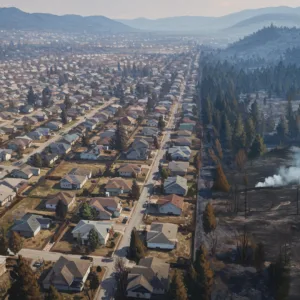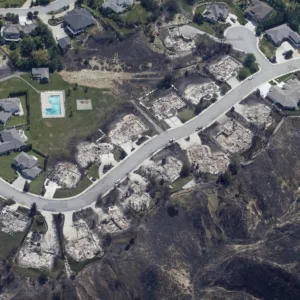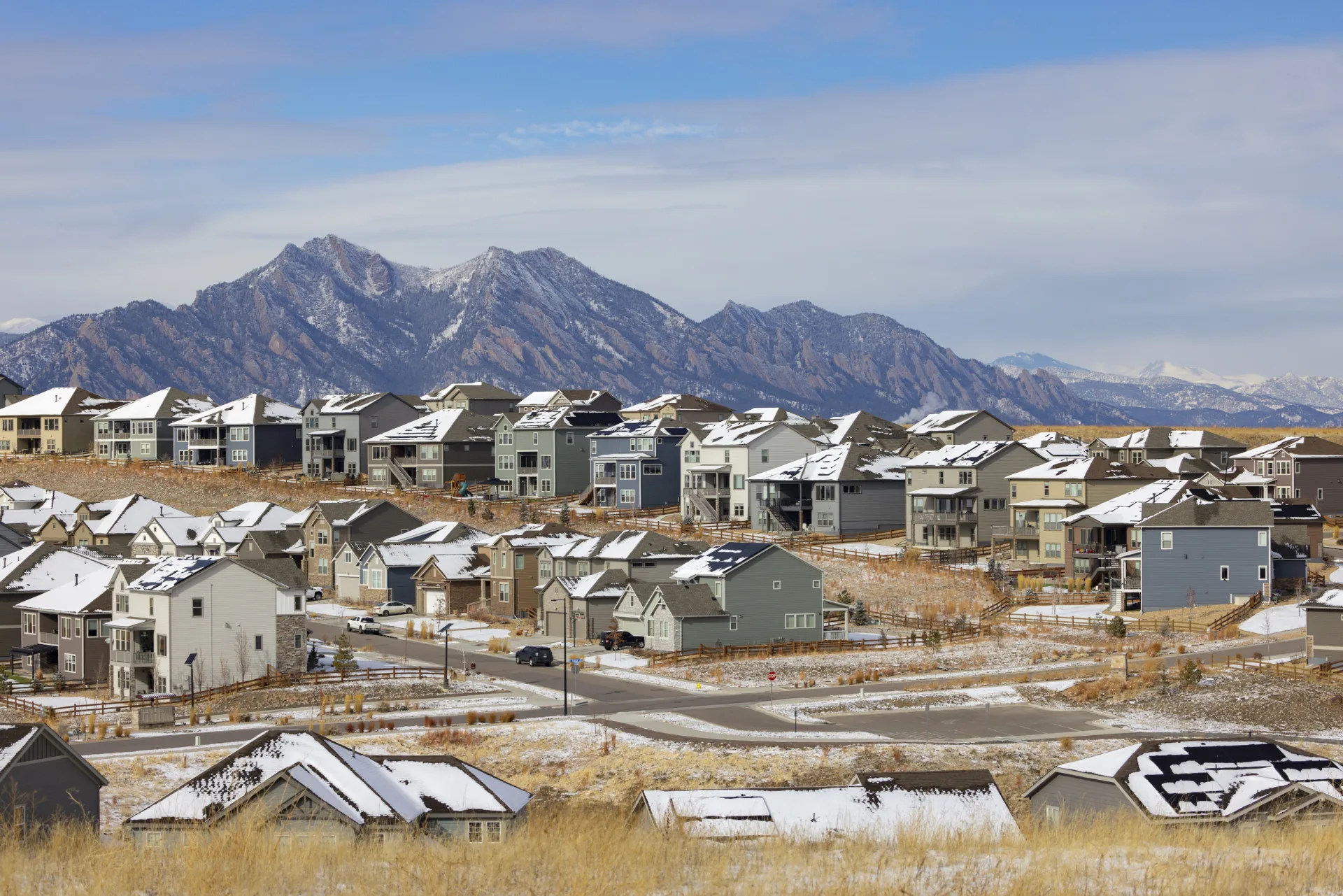
As wildfires grow more frequent and destructive across the Unites States, homeowners face a new challenge: securing affordable and adequate insurance coverage. Traditional insurance markets are strained, with rising premiums, non-renewals, and insurers withdrawing entirely from some markets in high-risk regions. The result is that homeowners must pay more for home insurance or may not be able to get home insurance at all. When entire communities face this crisis, the long-term consequences can include a reduction in local tax revenues and critical services, downgraded municipal bond ratings, and other financial pressures.
A new report from Headwaters Economics and Columbia Climate School, “Wildfire and Insurance: Options for Homeowner Coverage,” examines the latest research, lessons learned, and expert views to identify five approaches and innovative strategies for wildfire insurance coverage in high-risk areas. The report outlines advantages and trade-offs for each strategy, specific case studies and pilot programs, as well as policy recommendations and state regulatory examples from California, Colorado, and Oregon.
At the heart of these approaches is a need to reduce the risk of wildfires damaging homes and neighborhoods. Insurance is an important tool for providing financial protection after a disaster, as well as shaping behavior, such as incentivizing building and landscape upgrades that make homes more resistant to wildfire. While there is no single solution, with proper support these insurance strategies can play a role in reducing damages and provide clearer signals about wildfire risk to homeowners before a disaster strikes.
Want research like this in your inbox?
Subscribe to our newsletter!
Five strategies for wildfire insurance reform
State insurance regulators, individual communities, and homeowners seeking ways to address the wildfire insurance crisis may find benefits in these strategies:

Voluntary certification programs. These programs assess individual properties or entire communities based on how well they are prepared to resist wildfire. Those that qualify may see insurance retainment, discounts on their premiums, or other benefits. Some examples are Firewise USA®, Insurance Institute for Business and Home Safety (IBHS) Wildfire Prepared Home, and Boulder County Wildfire Partners in Colorado.

Community-based catastrophe insurance. Community-based catastrophe insurance models allow local groups to pool resources and offer financial protection against wildfire risks. These plans can offer compensation for wildfire-related damages, emergency response, and income losses, and may be well-suited to meet the needs of populations that are left out of traditional insurance coverage. There are limited examples of this option for wildfire, but pilot programs for flooding could be a template.

Parametric models. Parametric insurance provides policy holders an automatic payout whenever a predefined trigger occurs. For wildfire, this might be whenever a specific number of structures within an established region are destroyed, or if smoke particulate levels reach a predetermined level. The advantages of parametric models are that they can pay out very fast, and the funds can be used to cover a wide range of economic losses. However, they often do not pay amounts that fully cover actual losses. When paired with other types of insurance, parametric models may be especially well-suited to offset lost business revenue in areas dependent on tourism.

State FAIR plans. State-run Fair Access to Insurance Requirements (FAIR) plans are the insurance option of last resort in many states, but unfortunately they often face severe financial pressures. FAIR plans are funded by state assessments on private insurers or taxpayers and often come with high rates and limited coverage options. They also put financial stress on insurance companies that pay the assessments, which may mean higher rates for everyone, or push insurers to cease operations in a state market altogether. By providing a safety net, FAIR plans may inadvertently reduce the urgency for property owners or developers to avoid building in high-risk areas, exacerbating the underlying risk of wildfires.

State regulatory reform. State governments have options that could create more sustainable insurance markets when it comes to wildfire. These could include reforms on rate-setting, disclosure of wildfire risks, modifications to FAIR plans, and easing barriers for parametric plans, community-based insurance, and voluntary certifications. Updated, flexible regulations that allow for adjustments to changing market conditions could also improve conditions for insurers and homeowners alike.

The report’s authors note some limitations to their analysis. The solutions they explore in the report focus primarily on the insurance needs of homeowners only. People in other living circumstances, such as renters, Tribal communities, and others may not be able to benefit from all of them.
There is no single solution to the wildfire insurance crisis. Instead, a layered approach—combining traditional coverage with innovative models—offers the best chance to protect homeowners and build wildfire resistance across neighborhoods in high-risk areas. With greater collaboration between insurers, regulators, and communities on each of these approaches, we can begin to address coverage gaps and incentivize risk reduction that will bend the risk curve for insurance as well as wildfire disasters.

Acknowledgements
This report was a collaborative research effort by Headwaters Economics and by Dr. Lisa Dale of Columbia Climate School.