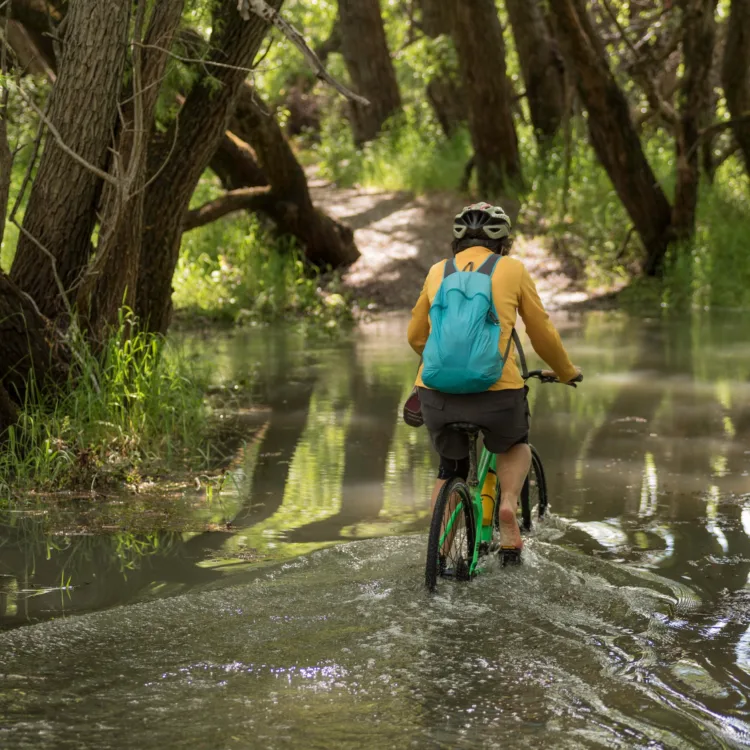
Building disaster preparedness in the outdoor recreation economy
As floods and wildfires grow more damaging, recreation leaders and emergency managers must team up to protect visitors, economies, and the landscapes we love.

Dr. Megan Lawson uses economic and statistical analysis to better understand the issues that communities face such as the economic potential and impacts of housing and land use policies, outdoor recreation, economic diversification, and public land management.
Megan is nationally known for her expertise in measuring the economic and community impacts of outdoor recreation and the potential of recreation activities to support local jobs and income. She leads collaborative projects across the United States pioneering new methods for estimating where and when people are recreating on public lands. Her innovative approach to measuring trail use is improving the ability of land managers to meet the increasing demand for healthy, outdoor recreation opportunities.
Equal parts scientist and communicator, Megan uses data to conduct actionable research that illuminates solutions. She applies analytical skills to land use, natural resource, and public health topics, with an emphasis on the unique needs and opportunities for rural communities. In every project, Megan builds trust through good listening and observational skills and her commitment to understanding communities’ needs and priorities.
A sought-after speaker, Megan talks about her research and economic concepts with a range of audiences, frequently speaking to community leaders, collaborative groups, land management agencies, and business groups. She is regularly quoted by major media outlets and has been interviewed multiple times on public radio, including on NPR’s Marketplace and All Things Considered. She was awarded a Wilburforce Fellowship in Conservation Science in 2016. Megan elevates Headwaters Economics’ work through her exceptional objectivity, her commitment to seeing issues from all sides, and her ability to cut through noise. Her degrees in economics and biology, with an emphasis on environmental, public, and urban economics, provide the foundation for her interdisciplinary approach. Megan has contributed to many of Headwaters Economics’ foundational research projects on topics ranging from land use conversion to migration trends.
As floods and wildfires grow more damaging, recreation leaders and emergency managers must team up to protect visitors, economies, and the landscapes we love.
 +
+
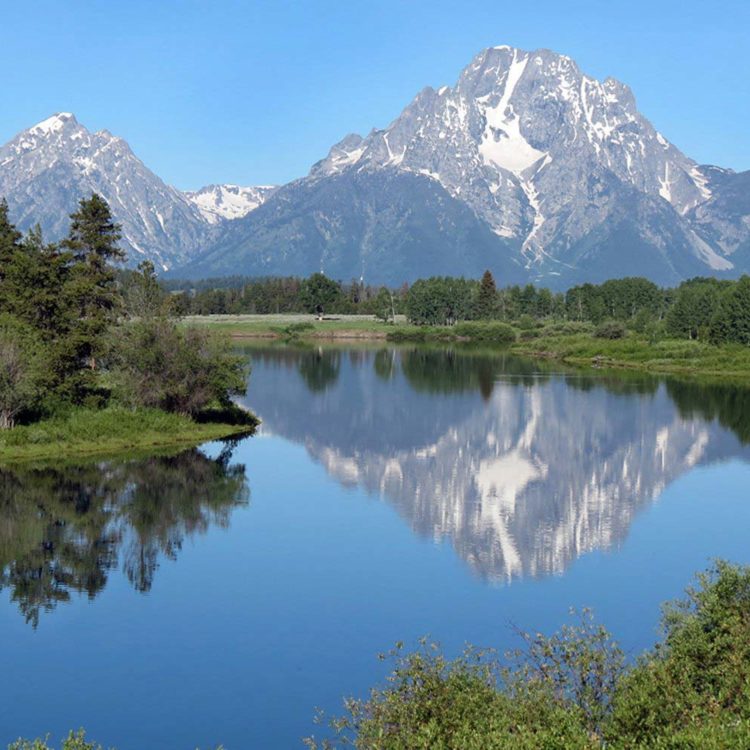
The growing connection between livelihoods and public lands calls for more investments in public access, preserving ecosystems, and minimizing privatization.

Federal public lands may offer opportunities to improve housing affordability in a limited number of states, but will face significant barriers from wildfire risk, water availability, and conflicts with existing resource or recreation uses.
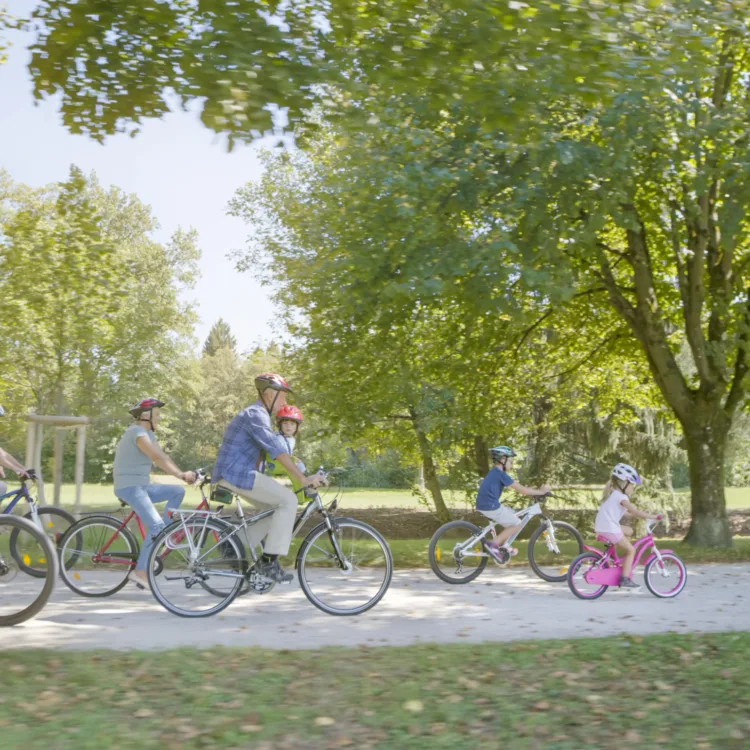
Ten years of data show the outdoor recreation economy has grown in nearly all states and is helping drive economic diversification and workforce development.
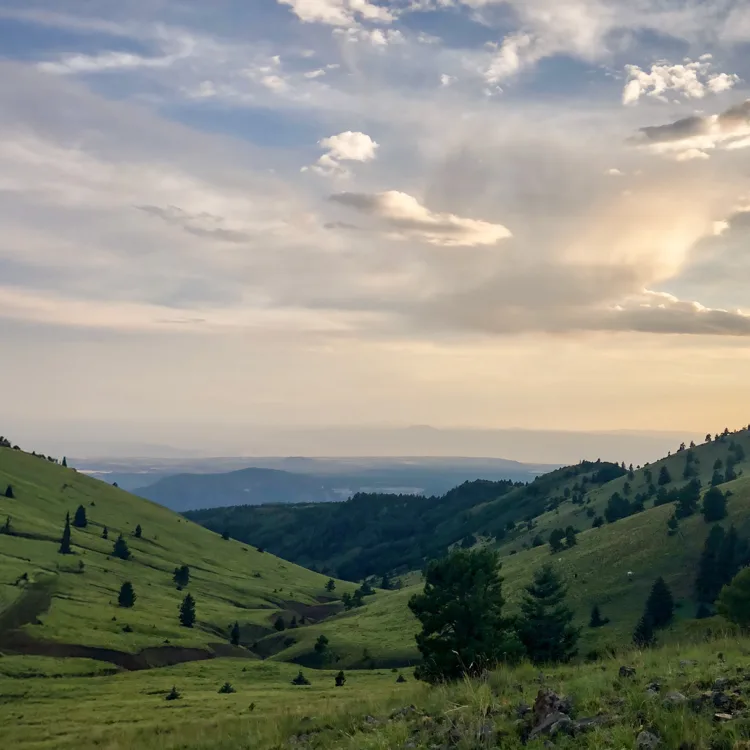
New modeling of trail use in Cibola and McKinley counties, New Mexico has identified more than $1.7 million in visitor contributions to the local economy each year.
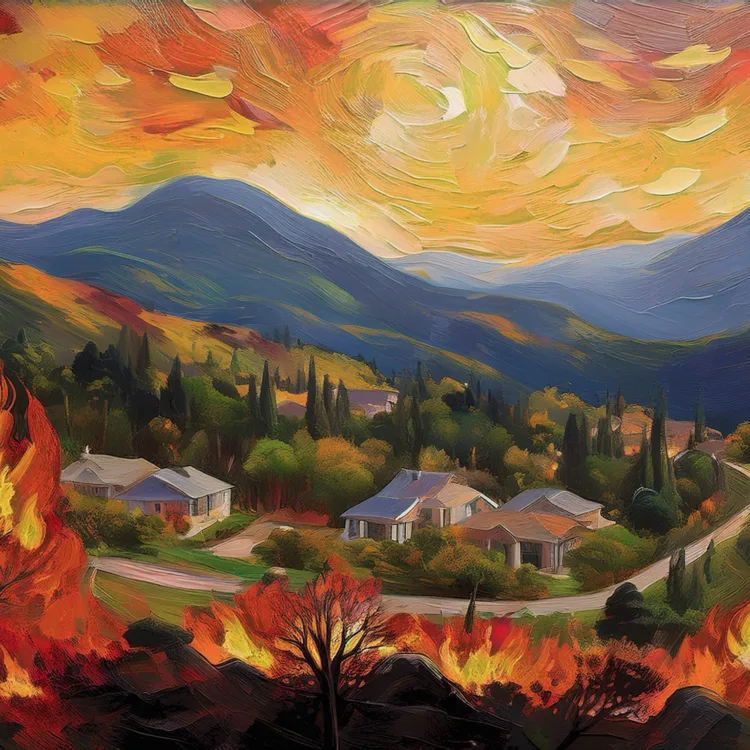
Many outdoor recreation communities face outsized wildfire and flood risks. They must prioritize updating infrastructure, community planning, and emergency response.